
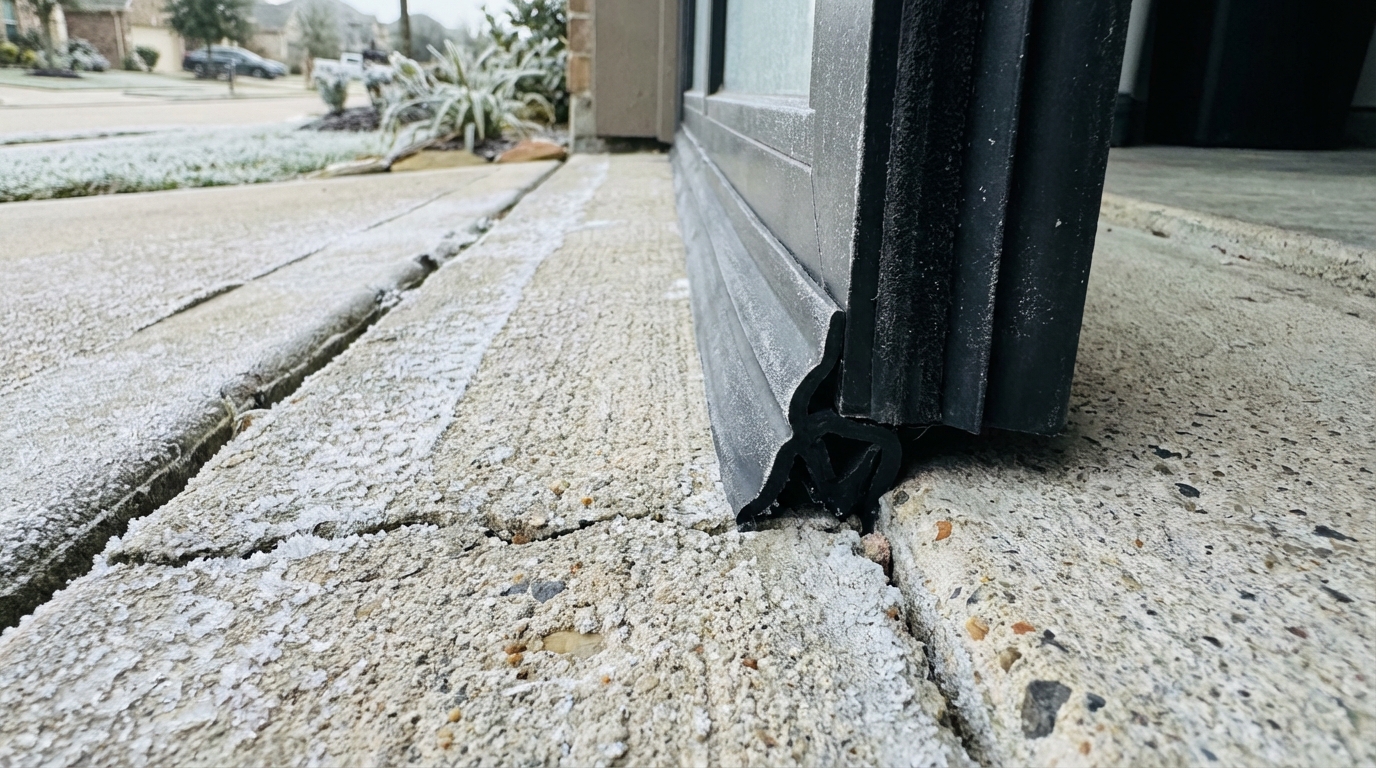
Houston deep freezes are rare, but when temperatures plunge below freezing, the bottom seal of your garage door can easily freeze to the concrete driveway. This creates a highly rigid bond that, if forced open, can tear the rubber weatherstripping, burn out your garage door opener motor, or warp the door panels. Protecting your garage door from icy conditions requires preemptive winterization, focusing on moisture control, proper lubrication, and seal integrity.
The Mechanics of a Frozen Bottom Seal
The bottom seal, typically a U-shaped or T-shaped rubber or vinyl strip, is designed to keep out water, pests, and drafts. However, when rainwater or condensation pools at the threshold during a cold front, the trapped moisture turns to ice. Rubber and vinyl also lose their elasticity in freezing temperatures, causing them to harden and adhere aggressively to the icy concrete. When you activate your automated opener, the motor pulls upward with immense force against this frozen bond. The weakest point will inevitably give way. Often, the opener's plastic gears strip, the internal trolley snaps, or the entire bottom seal rips away from its retainer track.
How to Prevent Your Garage Door Seal from Freezing
Preventative maintenance is the most effective strategy for dealing with unpredictable Texas cold snaps. Follow these precise steps to winterize the threshold and the seal itself.
1. Sweep and Clean the Concrete Threshold
Debris traps moisture. Leaves, dirt, and dust along the garage door threshold act as sponges, holding onto rainwater and preventing the concrete from drying. Use a stiff-bristled push broom to aggressively sweep the area where the door meets the ground. For persistent grime, scrub the concrete with a mild degreaser and rinse thoroughly. Crucially, allow the concrete to dry completely before the freeze arrives. If standing water is a persistent issue, consider installing a threshold seal directly onto the concrete to redirect water away from the door.
2. Clean and Inspect the Weather Seal
Lift your garage door to a comfortable working height and inspect the bottom seal. Dirt and road salt accumulation on the rubber itself will degrade the material and trap freezing moisture. Wipe the seal down with a damp rag and a mixture of warm water and dish soap. Examine the seal for cracks, dry rot, or flattening. A healthy seal should be pliable and retain its shape. If the seal is compressed, brittle, or torn, it must be replaced before the temperature drops. T-style astragal rubber seals are highly recommended for Houston homes because they remain flexible in varying temperature extremes.
3. Apply a High-Quality Silicone Lubricant
Lubrication creates a hydrophobic barrier between the rubber seal and the concrete, making it significantly harder for ice to form a bond. Avoid standard WD-40 or petroleum-based lubricants, as these will eat away at rubber and vinyl over time. Instead, use a pure silicone spray, such as 3M Silicone Lubricant or B'laster Industrial Silicone. Spray a generous, even coating along the entire length of the clean, dry bottom seal. You can also wipe it into the rubber with a clean microfiber cloth to ensure deep penetration. Reapply this barrier right before a forecasted deep freeze.
4. Manage Driveway Drainage
If your driveway slopes toward your garage, gravity will constantly feed water to your bottom seal. While regrading a driveway is a major undertaking, you can mitigate pooling by clearing nearby gutter downspouts and ensuring that drainage grates are free of debris. Installing a high-quality garage door threshold kit—a thick rubber strip glued directly to the concrete floor—can create a dam that prevents exterior water from reaching the primary bottom seal of the door.
Safely Opening a Frozen Garage Door
If you wake up to a hard freeze and suspect your bottom seal is fused to the concrete, do not press the button on your garage door opener. Doing so is the fastest way to cause hundreds of dollars in mechanical damage.
- Disengage the Opener: Pull the red emergency release cord hanging from the opener rail. This disconnects the door from the motor, allowing you to gauge the severity of the freeze manually.
- Attempt Manual Lifting: Try to lift the door using the handles. If it feels firmly locked to the ground, do not force it.
- Melt the Ice: Pour warm (never boiling) water along the bottom edge of the door to slowly melt the ice bond. Boiling water can thermally shock cold concrete, causing it to crack. Alternatively, use a heat gun or a hair dryer on a low setting, sweeping it back and forth along the threshold. Never hold the heat source in one place for too long, as extreme heat will melt or warp the weather seal.
- Clear the Slush: Once the door is free, immediately lift it and sweep away the melted water and slush so it does not refreeze. Dry the concrete and the seal with an old towel.
Winterizing Garage Door Mechanical Components
While the bottom seal is highly susceptible to freezing, the rest of your garage door system also requires attention during a cold snap. Metal contracts as temperatures drop, which increases friction between moving parts.
Lubricate Hinges, Rollers, and Springs
Cold weather causes standard grease to thicken and become sluggish, forcing your opener motor to work harder. Apply a lithium-based grease to all metal hinges, the bearings of your rollers, and the torsion springs located above the door. If you have nylon rollers, avoid getting grease on the nylon wheels themselves, as this can cause them to slide rather than roll within the track. Proper lubrication prevents the springs from binding and ensures smooth operation even when the metal contracts.
Check the Spring Balance
A properly balanced door feels weightless when operated manually. As springs contract in the cold, they can lose some of their tension. Disconnect the opener and lift the door halfway. If it falls heavily to the ground or flies upward, the torsion springs need adjustment. This is a highly dangerous task due to the extreme tension the springs are under and should only be performed by a qualified technician.
Professional Garage Door Winterization
Preparing your garage door for a Houston deep freeze protects your investment and ensures your daily routine remains uninterrupted. If your bottom seal is worn, your door is off-balance, or you want to ensure your system is fully prepared for dropping temperatures, professional maintenance is the safest route. The expert technicians at Mobil Garage Door can replace degraded weather seals, perform comprehensive mechanical lubrication, and tune your opener for optimal winter performance. Contact Mobil Garage Door today to schedule your preventative winter maintenance service and keep your home protected against the cold.