
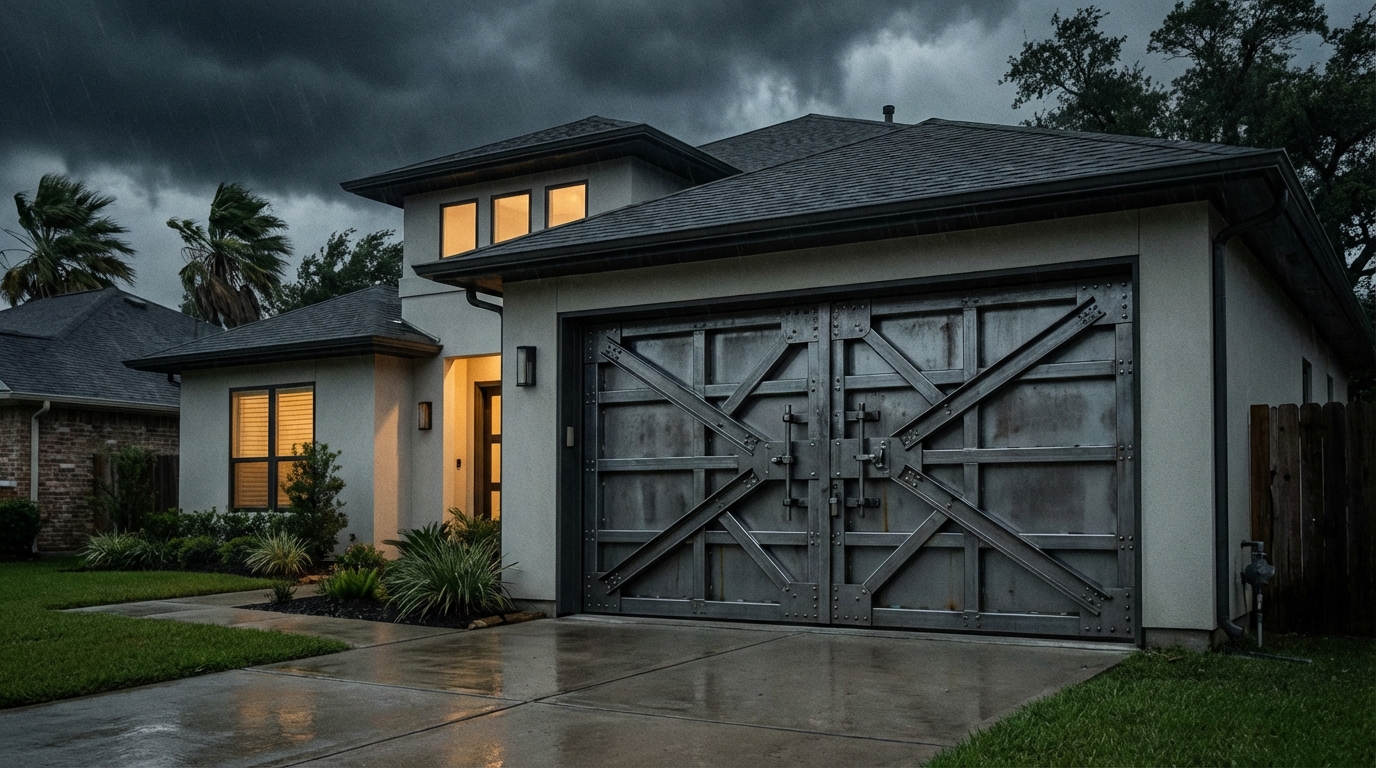
During a severe Gulf Coast storm, your garage door is the single most vulnerable structural element of your Houston home. If high winds compromise this large opening, the resulting sudden change in interior air pressure can easily blow out windows, destroy interior walls, and even detach the roof. Reinforcing your garage door before hurricane season begins is not just a home improvement project; it is a critical survival tactic for your property.
Why Your Garage Door is at Risk During a Hurricane
Garage doors are typically the largest entry point of a house, spanning up to 16 feet wide. When Category 3 or 4 hurricane winds hit Houston, standard unreinforced garage doors can buckle or twist out of their tracks. This failure allows positive wind pressure to enter the garage while negative pressure pulls on the roof from the outside. Structural engineers refer to this as a complete wind envelope failure. By reinforcing the door, you maintain the structural envelope, preventing catastrophic wind and water damage.
Step 1: Determine Your Current Wind-Load Rating
Before buying reinforcement materials, identify the current structural integrity of your existing garage door. Check the interior of your door for a wind-load sticker. This manufacturer label details the design pressures the door can withstand, usually measured in Pounds per Square Foot (PSF). In the Greater Houston area and Harris County, building codes often require doors to withstand wind speeds of 110 to 130 mph or more, depending on your exact proximity to the coast.
If your door lacks a sticker, or if you know it is a builder-grade door installed over ten years ago, it likely does not meet current Texas Department of Insurance (TDI) windstorm requirements. In this case, retrofitting or replacement is mandatory for safety.
Step 2: Install a Retrofit Hurricane Bracing System
For doors that are in good condition but lack a high wind-load rating, a retrofit hurricane bracing system is the most cost-effective reinforcement strategy. Products like the Secure Door bracing kit use heavy-duty vertical aluminum columns to physically anchor the door to the garage floor and the header above.
- Placement: A standard two-car garage usually requires two to three vertical braces spaced evenly across the door.
- Anchoring: You must drill holes into the concrete floor to install heavy-duty anchors. The top of the brace slides into a specialized bracket mounted securely into the wooden header above the door.
- Deployment: These braces are removable. You store them on the wall during normal conditions and lock them into place using the installed floor and header brackets when a storm warning is issued.
Step 3: Reinforce Horizontal Hinges with Struts
If you prefer a permanent reinforcement that requires no setup when a storm approaches, horizontal steel struts (U-bars) are an excellent option. These heavy-gauge steel channels run horizontally across the interior panels of the door, stiffening the sections to prevent buckling under extreme wind pressure.
Install a strut on every single panel of the door (typically four struts for a standard 7-foot door). Ensure you use self-tapping screws to attach the struts to the door's vertical stiles, not just the sheet metal. Keep in mind that adding struts adds significant weight to the door. You will absolutely need to adjust or replace your garage door springs to counterbalance the new weight. Failing to do so will burn out your garage door opener and create a severe safety hazard.
Step 4: Upgrade to Heavy-Duty Tracks and Rollers
Even if the door panels hold up to wind pressure, standard 2-inch tracks can bend or warp, causing the door to blow out of the frame. Reinforcing the door itself means the tracks now bear an increased load.
- Track Gauge: Replace standard 18-gauge tracks with thicker, commercial-grade 14-gauge steel tracks.
- Rollers: Swap out plastic or worn rollers for heavy-duty nylon rollers with solid steel stems. This ensures the connection between the reinforced door and the track remains secure.
Step 5: Secure the Tracks to the Wall Framing
Tracks are mounted to the wooden frame of the garage (the jambs) using metal brackets. Builders often use minimal brackets and short lag screws to save time. During a hurricane, these small screws can easily rip out of the wood.
Upgrade the track attachment by adding more track brackets to distribute the stress. Replace short screws with 3-inch, heavy-duty lag bolts that penetrate deeply into the structural framing of the home. This anchors the track system firmly to the skeleton of your house, drastically reducing the chance of a track blowout.
Step 6: Fortify the Bottom Seal to Prevent Water Intrusion
Hurricanes bring massive amounts of horizontal rain. Wind will drive water under your garage door if the bottom seal is worn out. Replace the existing rubber seal with a heavy-duty, T-end bottom astragal (a U-shaped weather seal). For maximum protection, install a rubber storm shield threshold directly onto the concrete floor beneath the door. The door will compress against this threshold, creating a watertight barrier that keeps flooding out of your garage.
When to Consider a Complete Wind-Load Replacement
If your garage door is old, rusting, or damaged, investing money into retrofitting braces and struts is a poor return on investment. Older hardware may still fail regardless of how many braces you attach. In these instances, upgrading to a factory-certified, wind-load rated garage door is the safest approach.
Modern impact-rated doors feature built-in struts, heavy-duty commercial hardware, and reinforced hinges directly from the factory. They meet all stringent Houston and coastal building codes automatically, requiring zero setup when a hurricane is approaching. You simply close the door, lock it, and evacuate or shelter in place with peace of mind.
Professional Hurricane Preparation with Mobil Garage Door
Reinforcing a garage door for hurricane-force winds involves dealing with extreme tension springs and heavy steel components. Improper installation of struts, braces, or springs can result in severe injury or a door that fails right when you need it most. Ensure your Houston home is truly ready for the storm season. Contact Mobil Garage Door today for a comprehensive wind-load inspection, professional bracing installation, or an upgrade to an impact-rated door.